textile

Polyurethane Modified Silicone Softener, Innovative Textile
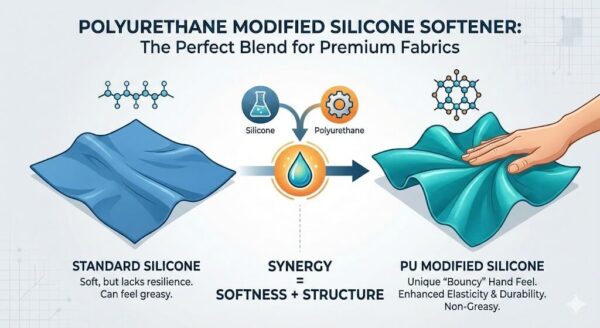
Polyurethane Modified Silicone SoftenerOur Polyurethane Modified Silicone softener represents a significant advancement in the field of Textile Finishing Auxiliaries. By utilizing an advanced Silicone Polyurethane Copolymer architecture, these materials are designed to overcome the limitations of traditional silicones softener, engineered to deliver the soft, luxurious hand feel of silicone with the exceptional durability and resilience of polyurethane.

Unlike a standard Textile Softening Agent that merely coats the surface, our technology synergizes the mechanical strength of polyurethane with the lubricity of polysiloxane. This hybrid structure creates a robust, flexible network on the fiber surface, ensuring performance that lasts.

Key Features and Typical Benefits

Our solution is formulated to deliver competitive advantages for global textile manufacturers:

  • Superior Durability: As a premier Wash-resistant Fabric Softener, the specialized copolymer structure promotes strong surface anchoring. This ensures the hand-feel persists through repeated domestic laundering cycles, solving a industry common pain point.

  • Optimized Hydrophilicity: We have engineered this product as a Hydrophilic Silicone Oil alternative. It contains hydrophilic segments that maintain the natural water absorbency of the substrate, making it an ideal candidate for premium cottons and moisture-management activewear.

  • Non-Yellowing:: Functioning as a high-performance Non-yellowing Softener, it is engineered to resist thermal oxidation. This preserves the brilliance of white and pastel-colored fabrics even under high-temperature curing conditions.

  • Process Stability: The product is available as a stable Emulsified Silicone Softener. Its excellent shear and pH stability helps minimize the risk of silicone spots and roller build-up in high-turbulence dyeing jets and continuous padding lines.

Technical Focus: The Hybrid Advantage

The core of this innovation lies in its unique molecular design. Technically defined as a Block Copolymer Silicone, it integrates distinct functional blocks to achieve specific performance targets.

By leveraging Isocyanate Functional Silicone chemistry (in a latent, stable form), the polymer facilitates better adhesion to both natural and synthetic fibers during the drying process. This reactive capability distinguishes it from physical blends, providing a uniform film formation that enhances fabric tear strength and abrasion resistance without the typical greasy residue.

Potential Applications

These Polyurethane Modified Silicone technologies are versatile candidates for a wide range of textile substrates:

  • Cellulosic Fabrics: Cotton, rayon, and lyocell knits requiring a durable, soft touch without compromising absorbency.

  • Performance Synthetics: Polyester and nylon blends where stretch recovery and anti-static properties are critical.

  • Home Furnishings: Bed linens and towels that demand long-lasting bulk and a premium tactile experience.

Our product offering

SPU286 is a high-concentration polyurethane-modified silicone softener, which provides exceptional smoothness, softness, elasticity, and refreshing hand feel for textiles and offering durable wash-resistant performance.

SPUWDH is a hydrophilic high-concentration polyurethane-modified silicone softener, which delivers excellent hydrophilicity along with a skin-friendly hand feel characterized by fluffiness, fullness, softness, smoothness, and elasticity and ensuring long-lasting wash resistance.

SPU75H is a high-concentration in-bath polyurethane-modified silicone softener, which exhibits excellent hydrophilicity and high stability while imparting an ultra-soft, smooth, fine, and elastic hand feel with wash-resistant durability.

SPU800H is a high-concentration cooling polyurethane-modified silicone softener, which offers a strong cooling effect with high coolness value and good hydrophilicity, alongside a smooth, soft, fine, and elastic hand fee lwith wash-resistant durability.

SPU888 is a high-concentration polyurethane-modified silicone emulsion specifically formulated for synthetic fibers, which provides a fluffy, full, soft, cotton-like, and bouncy hand feel with wash-resistant durability.

Silicone Softeners and Softening Agents product line from SINOSIL includes softener flakes, amino silicone softeners (in emulsion and oil form) as well as block silicone softeners (in emulsion and oil form), read more about full-range line of SINOSIL TEXTILE SOFTENER

Featured Products

Unveiling the New Face: A Journey of Innovation and Growth

Moment of transformation

We are proud to announce our rebranding as SINOSIL, jointly incorporated sales office by manufacturer, a change that reflects our dedication to innovation, growth, and an unwavering commitment to excellence.

As SINOSIL, we are excited to embark on this new chapter. It signifies our commitment to a future of possibilities and achievements. Thank you for being part of our story.

64212f1af8514ec45dbce82d Sustainable

How to Improve Textile Finishing Efficiency?

Silicone softeners are a crucial component in textile finishing, enhancing the softness and durability of fabrics. To fully grasp the significance of maximizing efficiency in silicone softener application, it’s essential to understand the fundamentals of these products and how they work.

image home

What is the Mechanism of Silicone Softener?

The mechanism behind silicone softeners lies in their molecular structure. Silicone softeners are composed of silicone-based polymers, which have a unique ability to form a lubricating film on the surface of the fabric fibers. This film reduces the friction between fibers, resulting in a smoother, softer texture.

What Makes Fabric Softener Work?

Fabric softeners, including silicone softeners, work by altering the surface properties of textile fibers. They reduce the friction between fibers, making the fabric feel smoother and softer to the touch. Additionally, fabric softeners can improve the drape and overall comfort of the textile.

What Makes Silicone More Flexible?

Silicone’s flexibility stems from its molecular structure, characterized by the presence of silicon-oxygen (Si-O) bonds. These bonds allow for flexibility while maintaining the stability and durability of the material. In silicone softeners, this flexibility is harnessed to create a soft and pliable feel on textiles.

What is the Mechanism of Softening Effect?

The softening effect of silicone-based softeners primarily occurs through the formation of a micro-thin film on the fabric’s surface. This film reduces inter-fiber friction, resulting in improved softness and flexibility. The silicone softener molecules align themselves on the fabric’s fibers, creating a lubricating layer that imparts a soft hand feel.

In conclusion, understanding the application and mechanism of silicone softeners is essential for textile manufacturers aiming to maximize efficiency in their usage. By selecting the right silicone softener, optimizing dosage, and implementing efficient application methods, manufacturers can achieve consistent, high-quality results in textile finishing. Additionally, knowledge of the underlying science behind silicone softeners can aid in product selection and process improvement.

Featured Products

Hydrophilic Silicone Oil

Block Silicone Oil

antifoam products

Silicone Antifoam

water repellent agent

Water & Oil Repellent

Go to Top